In today’s NHL, where defensive systems are tighter than ever, and goalies are bigger and more technically sound, goals don’t often come from highlight-reel rushes. Most goals aren’t pretty; they’re greasy, gritty, and generated within five feet of the net. In this high-stakes environment, mastering the art of tips, deflections, and effective screening has become a game-changing skill set for players looking to make a difference.
Gone are the days when brute force and individual brilliance were enough to consistently light the lamp. Instead, NHL teams are increasingly relying on net-front presence, turning seemingly harmless shots from the point into scoring opportunities through well-placed tips and deflections.
This guide will explore the essential elements of these crucial skills, providing insights and practical advice to elevate any player’s offensive game. Think of this as a masterclass in creating chaos and converting opportunities in the tightest areas of the ice.
The Art of the Screen: Taking Away the Goalie’s Eyes
Screening in hockey is a crucial offensive tactic, a blend of artistry and physicality designed to impair the goalie’s vision and increase the chances of scoring. It’s about establishing a net-front presence at the right time and knowing when to settle right where the action takes place. The key lies in understanding that this isn’t a static position. Instead, opportunism is really necessary. When the moment is right, it is about executing a perfectly timed intrusion into the goalie’s line of sight.
Mastering the screen requires a unique set of skills. Players must maintain their balance, withstand pressure from defenders, and skillfully disrupt the goalie’s focus. Expert tips for effective screening include using subtle movements to distract the goalie without drawing penalties and presenting a large, unyielding obstacle. It’s a calculated disruption and knowing when to get there, not just camping out front.
Positioning for Maximum Disruption
Effective net-front positioning is key to a successful screen. It involves understanding the ideal distance from the goalie, typically a few feet, close enough to obstruct vision but far enough to avoid immediate contact and penalties. The angle of your body is also critical; generally, angling slightly towards the puck allows you to better track the play and anticipate rebounds while still maintaining a solid screen. Adjusting position constantly based on the puck’s location and the flow of play ensures the screen remains effective and adaptable, maximizing disruption.
Dealing with Defenders and Maintaining Your Ground
Net-front battles are an inevitable part of screening, demanding both physical and mental resilience. Using your body, stick, and leverage to hold your ground against opposing defenders is essential. Tactical advice includes using your backside to create space from defenders, and employing quick pivots to maintain optimal positioning. Anticipating defensive tactics and reading gaps, as if you will make a quick move, maintaining balance, and winning space is crucial. By winning this space, and battling, you can create and maintain an effective screen, turning the net-front into a high-scoring opportunity.
Mastering the Tip: Hand-Eye Coordination and Deft Deflections
Tipping a puck is a high-skill offensive ability. Success relies on a mix of timing, deft hand-eye coordination, and the ability to redirect the incoming shot. Mastering this ability involves more than just sticking your stick out; it is about knowing how to angle your stick to achieve the desired deflection, timing your tip perfectly, and keeping soft hands to maintain control. Deception is key because it lets you fool the goalie, making it harder to anticipate the puck’s change in direction.
Reading the Shot: Anticipating the Puck’s Trajectory
Reading a shot starts the second the shooter prepares to release the puck. By visually analyzing the shooter’s body language, the angle of their stick, and the position of their feet, an offensive player can anticipate the puck’s trajectory. Spotting these cues triggers a more accurate tip attempt, greatly increasing the chance of a successful deflection and a possible goal. Offensive awareness involves more than just watching the puck; it involves understanding the shooter.
Soft Hands, Hard Results: Redirecting with Precision
The term “soft hands” describes the subtle skill needed to redirect a puck effectively. Instead of gripping the stick tightly, a player must maintain a loose grip, allowing for quick reactions and changes. With soft hands, subtle movements become tools for redirecting the puck. The ability to change the puck’s direction with small, controlled adjustments results in more accurate and deceptive deflections. The focus shifts from brute force to precise manipulation of the stick’s angle.
Net-Front Presence: Winning the Battle in the Trenches
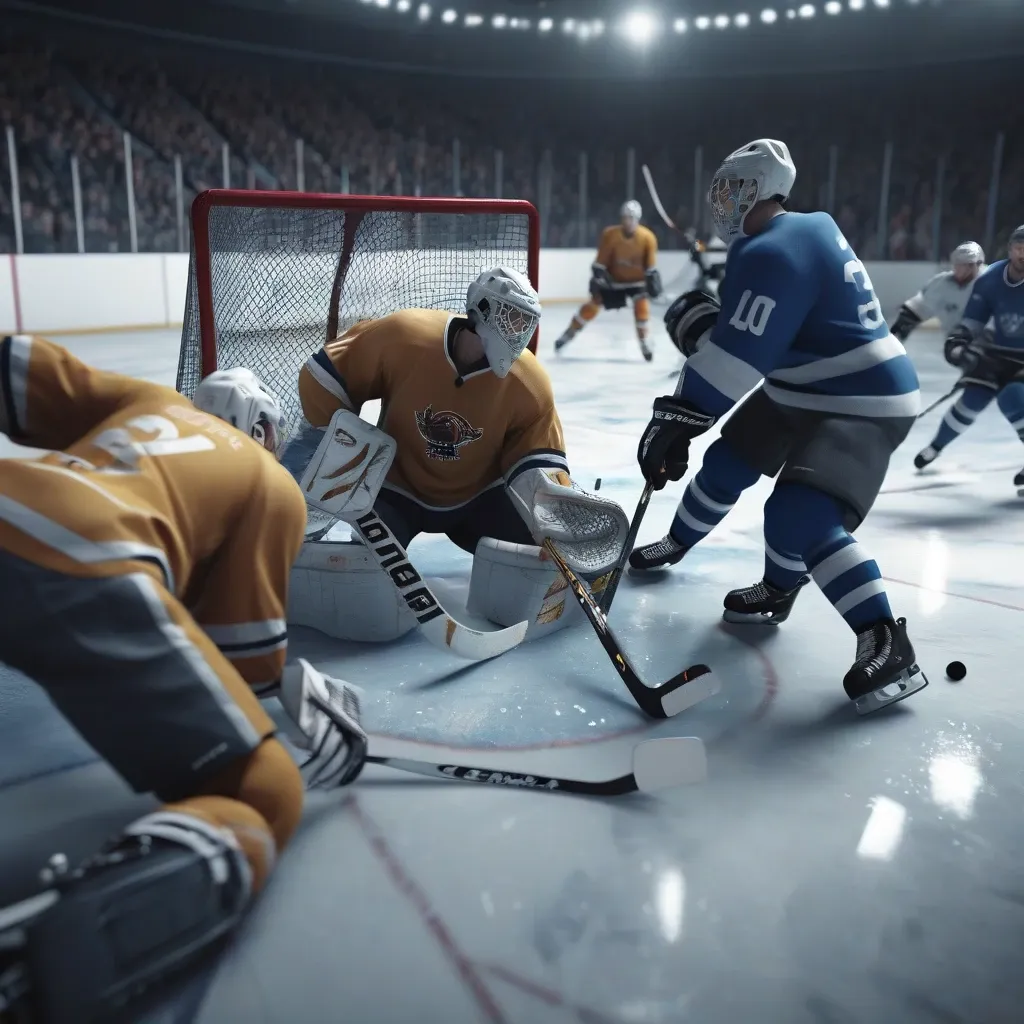
Net-front battles in hockey are not for the faint of heart. This area, a prime scoring zone, becomes a chaotic mix of bodies, sticks, and flying pucks. Winning these battles requires a unique blend of physical and mental toughness. A player needs the grit to withstand constant pushing, shoving, and stick work, all while maintaining their balance and focus. It’s about establishing position, creating screens, and pouncing on rebounds, often in the face of intense defensive pressure. Persistent determination is crucial; players must be willing to take punishment and keep coming back for more. Success in front of the net hinges on embracing the ‘dirty areas’ – those high-traffic, physically demanding zones where goals are often scored.
The Mental Game: Staying Focused and Determined
The mental aspect of net-front battles is just as important as the physical. Players must possess unwavering concentration to stay focused amidst the chaos. It’s about maintaining a high level of awareness, anticipating plays, and reacting quickly to loose pucks. According to thescore.com, concentration is a key factor to win ice Hockey matches, and it is a mental skill that requires persistence and mental focus. Mental toughness also means shaking off missed opportunities and continuing to battle hard, shift after shift. A player’s ability to stay mentally sharp in the offensive zone significantly impacts their effectiveness in these crucial net-front battles.
Timing and Anticipation: Being in the Right Place at the Right Time
Effective screening and tipping aren’t just about size and strength; they’re about hockey IQ, offensive awareness, and a keen sense of timing and anticipation. Mastering these elements transforms an average player into a net-front presence opponents dread.
Reading the play is paramount. It involves constantly scanning the ice, observing the puck’s trajectory, and predicting where it’s headed next. Are your teammates setting up for a cycle? Is a point shot imminent? Recognizing these patterns allows you to anticipate the optimal moment to initiate your move toward the net. This proactive approach ensures you’re not just reacting to the play but actively shaping it.
Timing is everything. Arriving at the net-front even a split-second too early or too late can be the difference between a successful screen or tip and a missed opportunity. Focus on syncing your movements with the play’s development. If a shot is coming from the point, time your arrival at the net just as the puck is about to reach the goaltender. This maximizes your chances of deflecting the puck or disrupting the goalie’s vision.
Understanding defensive schemes provides a significant advantage. Recognizing common defensive formations and strategies allows you to anticipate their movements and exploit vulnerabilities. For example, if the defense tends to collapse towards the slot, you can position yourself slightly outside the congestion to create a better shooting lane for your teammates or find space for a quick tip-in. By understanding the “why” behind the defense’s actions, you can intelligently position yourself to maximize your offensive impact.
Practice Drills: Honing Your Skills on the Ice
Elevating your screening and tipping game requires dedicated practice. It’s not just about standing in front of the net or waving your stick; it’s about mastering the nuances of body positioning, hand-eye coordination, and disrupting the goalie’s vision. Several hockey drills can transform a player into a screening and tipping maestro. These drills need repetition and focus on the details to translate into success during a fast-paced game.
Screening Drills:
Players can practice screen positioning without pucks, focusing solely on maintaining position in front of the net while reacting to simulated shots. Another drill involves a coach shooting pucks from the blue line while players practice angling their bodies to obstruct the goalie’s view without interfering with play. This hockey drill emphasizes balance, agility, and awareness.
Tipping Drills:
For tipping, start with stationary pucks and work on stick blade angle to redirect shots on the net. As skills improve, introduce moving pucks, and vary the speed and height of the passes. Players should focus on soft hands and redirecting, not wildly swatting at the puck.
These practice drills, repeated consistently, lead to improvement. The combination of persistent practice and focused, detail-oriented execution, players can truly start to dominate in the crucial areas around the net.
Game-Day Application: Translating Practice to Performance
The drills and techniques honed in practice are only valuable if they translate to tangible results during games. The ability to read defensive schemes and anticipate play development is paramount. Success involves understanding the nuances of various defensive setups and adapting screening and tipping strategies accordingly. For instance, against a tight zone defense, focusing on creating traffic and disrupting the goalie’s vision becomes more critical than precise tip-ins.
Effective communication is also important. Before each play, communicate specific intentions, such as desired screen positioning or tipping targets, to maximize potential. These quick exchanges can significantly enhance the chances of success. Constant communication helps to refine strategy.
Adapting to game flow is another key element. Early in the game, observe the opposing goalie’s tendencies and defensive reactions to screens and tips. Use this information to adjust positioning and technique throughout the game. If the goalie struggles with high tips, prioritize getting the puck up. If defenders are aggressively clearing screens, try quick movements and changes in positioning to create confusion and open lanes. This dynamic adjustment that converts practice into real-time advantage.
Conclusion
Mastering the art of tips, deflections, and effective screening can significantly elevate your scoring potential in hockey. These net-front tactics transform seemingly harmless shots into golden opportunities. Developing a strong net-front presence is not just about physical positioning; it’s about anticipation, quick reflexes, and the ability to disrupt the goalie’s vision. Focusing on improving these skills will undoubtedly make you a more dangerous offensive player. So, embrace the chaos in front of the net, hone these techniques, and watch your goal tally rise. Start practicing your tips and deflections today!